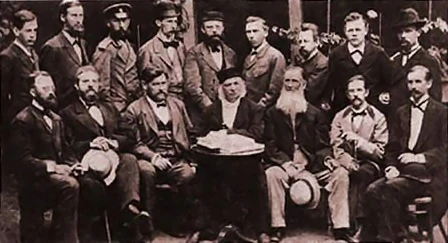
Charles Messier

via Wikipedia: Black hole · see source
His work helped astronomers distinguish between permanent and transient diffuse objects in the night sky.
- field
- Astronomy
- nationality
- French
Lore & Background
Messier's occupation as a comet hunter led him to compile a list of fixed diffuse objects that could be mistaken for comets, created with his friend and assistant Pierre Méchain. Messier observed with a 100 mm refracting telescope from Hôtel de Cluny in Paris.
Reader's Guide
The Messier objects, designated M1 through M110, are still widely used today due to their relative brightness and accessibility. His work was driven by a practical need to avoid confusing permanent deep-sky objects with transient comets, a goal that inadvertently created a lasting reference for astronomers. The catalogue includes 39 galaxies, 4 planetary nebulae, 7 other nebulae, 26 open clusters, and 29 globular clusters. Messier also discovered 13 comets and co-discovered another. Despite a late-life attempt to curry favor with Napoleon through astrological claims, his scientific contributions endure as a foundational resource for observing the night sky.
Did You Know?
- Messier was the tenth of twelve children, and six of his siblings died young.
- He was nicknamed 'Ferret of Comets' by King Louis XV.
- His catalogue was originally created to help distinguish comets from permanent diffuse objects.
Frequently Asked Questions
What was Charles Messier's nationality and field of work?
He was French by nationality and worked in the field of astronomy, dedicating his career to observing and cataloguing nebulae, star clusters, and other celestial objects.
More in Astronomers And Cosmologists 1-24
Elsewhere in the Astronomers And Cosmologists universe
Spotted an error? Know more?
This is a living reference — every entry is fact-audited, and reader corrections feed straight into our audit queue. Suggest an edit · See this site's audit record